Over the past month (mid-October to mid-November 2026), U.S. financial markets experienced heightened volatility defined by a sharp rotation out of artificial intelligence (AI) and mega-cap technology stocks and back into defensive and value sectors. While the S&P 500 pulled back roughly 3.3% from its mid-October highs near 7,805 to around 7,547, stubborn inflation data and rising Treasury yields forced investors to price in renewed Federal Reserve interest rate hikes.
Equity Market Performance & Rotation
Tech and AI Sell-Off. Mega-cap technology and semiconductor stocks bore the brunt of the downturn, sending the Nasdaq Composite into correction territory (down more than 10% from its peak). Investors grew increasingly skeptical of massive debt-funded AI capital expenditures, diminishing returns on spending, and potential regulatory scrutiny following the midterm elections.
Broadening Market Breadth. Beneath the surface of headline index declines, market participation improved significantly. Value stocks, mid-caps, and defensive sectors—such as utilities, health care, and consumer staples—outperformed. The equal-weight S&P 500 beat the cap-weighted S&P 500 by nearly 6 percentage points in October alone.
Post-Election Swings. Early November saw dramatic daily swings around the U.S. midterm elections, where a decisive Democratic congressional sweep initially sparked a relief rally before triggering a steep tech-led sell-off on fears of tighter AI oversight.
Interest Rates, Inflation & Bonds
Federal Reserve Policy Shift. After holding its benchmark rate steady at its October 28 meeting, the Federal Reserve is widely expected to resume tightening. Following persistent inflation readings and hawkish remarks from officials—including Fed Governor Christopher Waller floating a potential 50-basis-point move—markets fully priced in at least a 25-basis-point rate hike for the December 8–9 meeting.
Stubborn Inflation Readings. October inflation data confirmed broadening price pressures. The Consumer Price Index (CPI) rose 0.4% month-over-month, while the Producer Price Index (PPI) climbed 0.3% on the month and surged 6.5% year-over-year—its highest annual pace since November 2022.
Treasury Yields Climb Past 5%. Renewed rate-hike expectations and heavy corporate debt issuance pushed the benchmark 10-Year Treasury Yield back above 5.0%, trading between 5.10% and 5.15% by mid-November.
Commodities & Currency
U.S. Dollar Strength. Fueled by rising U.S. Treasury yields and widening interest-rate differentials, the U.S. dollar rallied to a 19-month high.
Energy and Metals Retreat. Crude oil experienced sharp swings amid Middle East diplomatic developments before retreating from recent highs. Meanwhile, spot gold faced heavy selling pressure, sliding below $4,000 per ounce as higher yields and a stronger dollar weighed on non-yielding assets
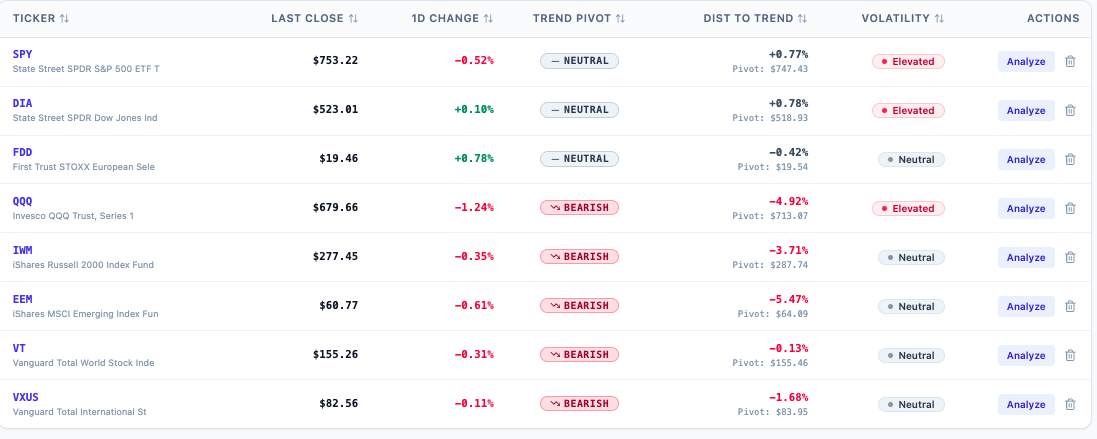
Market Index ETFs
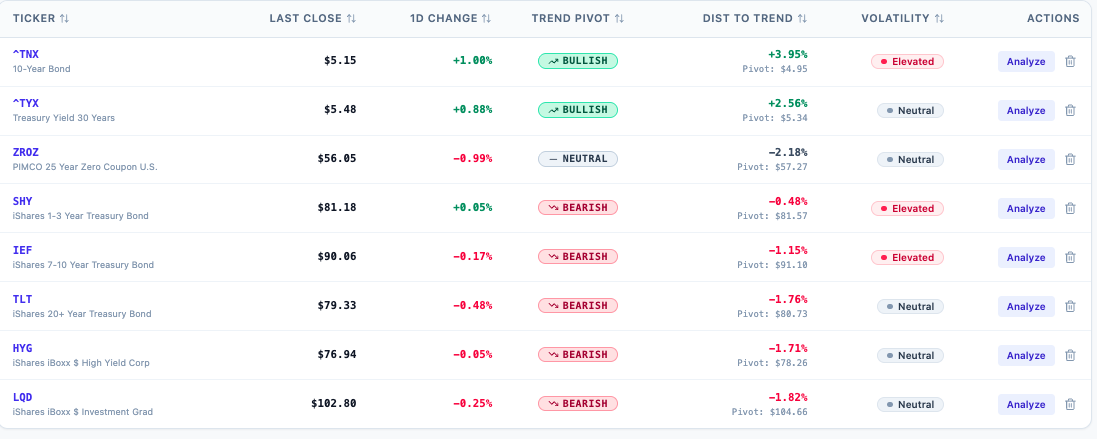
Interest Rates & Bond ETFs
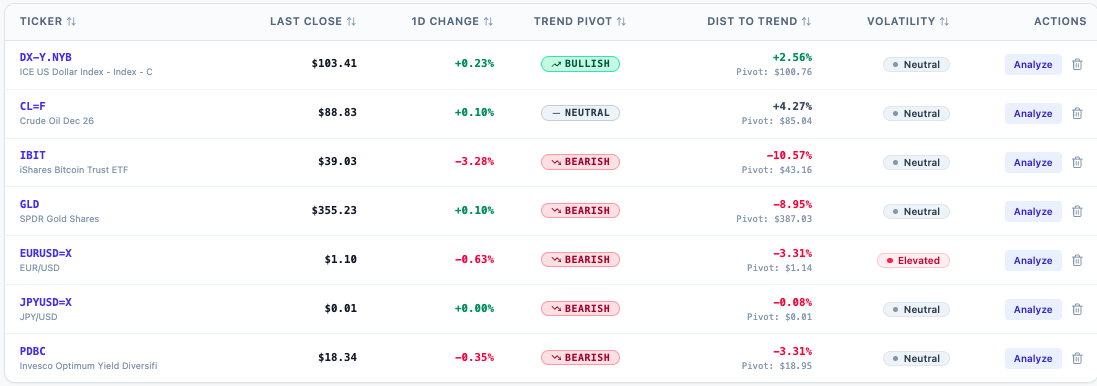
Commodities & Currencies